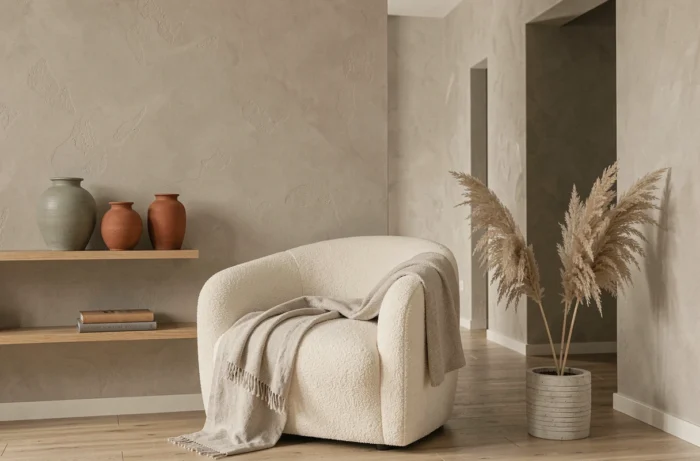
Interior decoration in 2026 is defined less by a dominant style than by a set of new constraints: regulations on pollutant emissions, the rise of reuse in design, and the modularity of spaces. Enhancing your interior with a unique decor now involves mastering these parameters as much as choosing a color or material.
VOC and formaldehyde emissions: the invisible filter of interior decor
Every paint, adhesive, or coating applied in a living room releases volatile organic compounds (VOCs) into the ambient air. Since the regulatory framework came into effect in 2013, construction and decoration products sold in France must display an emission class ranging from A+ to C. This classification applies to paints, floor coverings, adhesives, and certain furnishing elements.
A new European limit now targets formaldehyde emissions from furniture. This evolution changes the way furniture is chosen: checking the emissions of panels, adhesives, and finishes is as important as aesthetics. A piece of furniture with an attractive design but rated C can degrade the air quality of a closed room within weeks.
In practical terms, before buying a shelf, a sideboard, or a decorative wall panel, spotting the emissions label on the packaging or product sheet remains the most reliable action. Water-based finishes and solid woods untreated with formaldehyde generally offer a better profile, but only the label counts.
Inspiration abounds for combining a refined atmosphere with healthy air: on La Petite Déco’s decor page, you can find ideas that integrate this requirement without sacrificing style.
Reuse and desirable design: giving furniture a second life
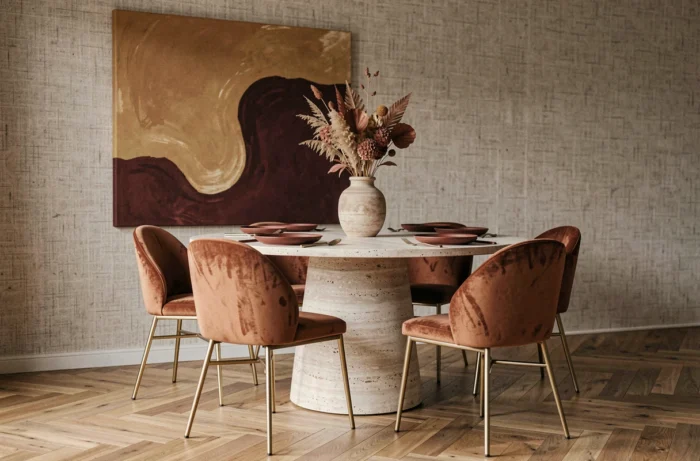
Reuse is no longer limited to hunting for a vintage chair at a flea market. The 2026 edition of Maison&Objet highlighted the transformation, repair, repurposing, and integration of antique furniture into contemporary interiors. The challenge has shifted: it is no longer just about buying “responsibly,” but about making reuse visually desirable.
This shift changes the stance of the amateur decorator. A 1970s sideboard repainted in a deep shade (burgundy, terracotta, sage green) and paired with brushed brass handles creates an effect that entry-level new furniture cannot replicate. The patina, old joinery, and wood species that are no longer commercially available bring a uniqueness that is impossible to mass-produce.
Three criteria for integrating an antique piece into a current decor
- Proportion: a massive piece of furniture works better in an open space, placed against a light wall. The contrast of volume creates a visual tension that structures the room.
- Finish: a layer of contemporary matte paint or satin varnish unifies an antique piece with the rest of the living room without erasing its character.
- Lighting context: spot lighting (table lamp, adjustable wall light) highlights the details of the furniture rather than a ceiling light that flattens everything.
DIY upcycling follows the same logic. Transforming old objects into decorative elements (frames, lighting fixtures, wall supports) allows for the creation of unique pieces while reducing the volume of household waste related to furnishing.
Deep colors and natural materials: the 2026 decor palette
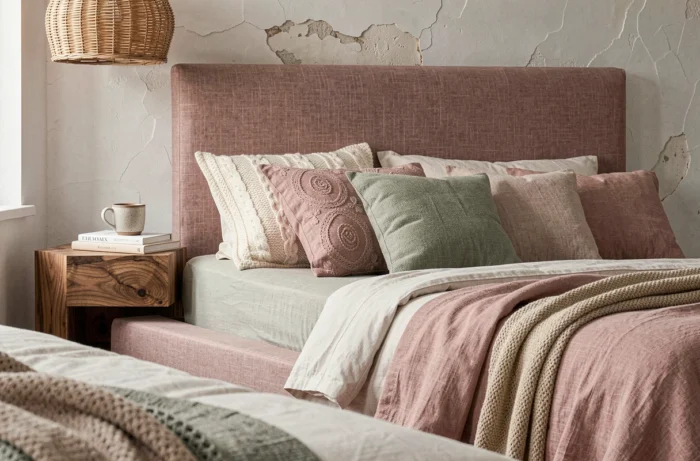
This year’s trends confirm a shift towards deep and saturated colors. Wine burgundy, mocha brown, and forest green are gradually replacing the neutral tones (beige, light gray, off-white) that have dominated interiors for several years. These shades work particularly well on an accent wall in a living room or bedroom.
In terms of materials, dark wood (notably walnut) is making a strong comeback in furniture. Organic, curved, and asymmetrical lines are taking precedence over strictly geometric edges. This trend reflects a search for tactile and visual comfort.
Combining colors and textures without overcrowding the space
A successful interior in 2026 is based on a simple principle: limit the palette to three main shades per room. A neutral dominant (wall, floor), a strong shade (furniture or textile), and a metallic or natural note (accessory, lighting). Chrome is making a discreet comeback, adding a touch of shine that contrasts with matte and textured surfaces.
Tiles extend beyond the floor and onto the walls, including in living spaces. Large formats in ceramic stoneware mimicking stone or polished concrete create a visual continuity that enlarges small rooms.
Modularity of spaces: adapting decor to changing uses
The decline in impulsive purchases in decoration is pushing towards modular solutions. A piece of furniture that serves only one function loses interest compared to repositionable shelves, removable partitions, or transformable seating.
This approach also responds to the gradual reduction of living spaces in large urban areas. Modularity is becoming a design criterion, not just a practicality. Furniture designers are presenting arrangement systems that adapt to the configuration of each room without heavy renovations.
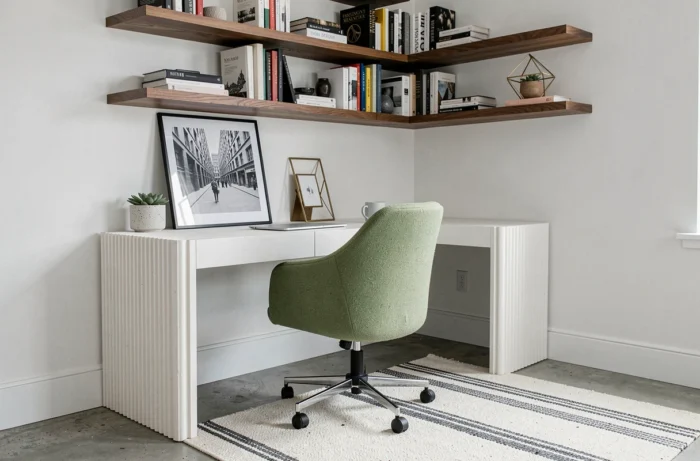
A living room that also serves as an office requires visual segmentation: a narrow console, a rug that delineates the work area, and differentiated lighting between the two spaces. These choices pertain to both decoration and layout.
Enhancing an interior in 2026 relies less on the accumulation of objects than on the coherence between the chosen materials, their impact on air quality, and their ability to evolve with use. A well-restored antique piece, a paint rated A+, a palette narrowed down to three shades: these concrete choices yield a more sustainable result than a trend catalog applied without filter.