Mold on fabric is not just a simple pigment stain. Fungal hyphae penetrate the fibers, degrade the cellulose in cotton, and weaken the proteins in wool. Removing mold from fabrics without bleach requires understanding this distinction between surface staining and deep colonization, as the treatment protocol directly depends on it.
Pore Materials and the Limits of Home Stain Removal Against Mold
A fine cotton garment and a polyurethane foam cushion do not present the same problem. On a machine-washable textile, mechanical agitation combined with an antifungal agent dislodges the majority of spores. On a thick upholstery fabric, mold can reach the padding without any surface treatment guaranteeing complete sanitation.
We consider that a porous textile that has remained damp for more than 48 hours with visible contamination on both sides should be replaced, not just cleaned. Wet and moldy porous materials may need to be discarded, as professional remediation protocols remind us.
For washable textiles with localized stains, find practical tips on Mon Habitat detailing bleach alternatives suitable for each fiber.
White Vinegar on Moldy Fabric: Protocol and Failure Cases
White vinegar (acetic acid at 5-8%) is antifungal, but its effectiveness depends on the material and the stage of contamination. On a recent white mold stain (mildew stage), it is usually sufficient. On black mold that has been established for several weeks in natural fibers, the result will be partial.
Correct Application of Vinegar on Textiles
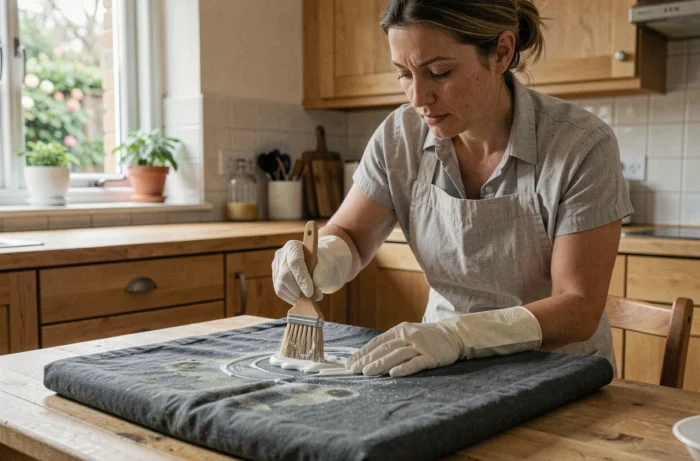
- Saturate the affected area with pure white vinegar, without dilution, and let it sit for about twenty minutes before gently brushing the surface with a soft-bristle brush
- Then wash the textile in the machine at the maximum temperature tolerated by the care label, adding half a cup of vinegar to the fabric softener compartment
- Completely dry the fabric, preferably in the sun: UV rays complement the antifungal action and help reduce residual discoloration
If a musty smell persists after washing, it is a sign that the treatment has not eliminated the contamination deeply. A second wash is rarely sufficient: consider a prolonged soak with another agent.
When Vinegar is Not Enough
On wool, silk, or a fabric dyed with reactive dyes, the acidity of vinegar can alter the shades. Testing on an inner hem before treating the stain remains a non-negotiable step. On synthetic fibers (polyester, nylon), vinegar acts on the surface but does not penetrate the micro-pores where spores reside.
Baking Soda and Sodium Percarbonate: Two Distinct Agents
These two products are often confused in consumer guides. Their mode of action on mold has nothing in common.
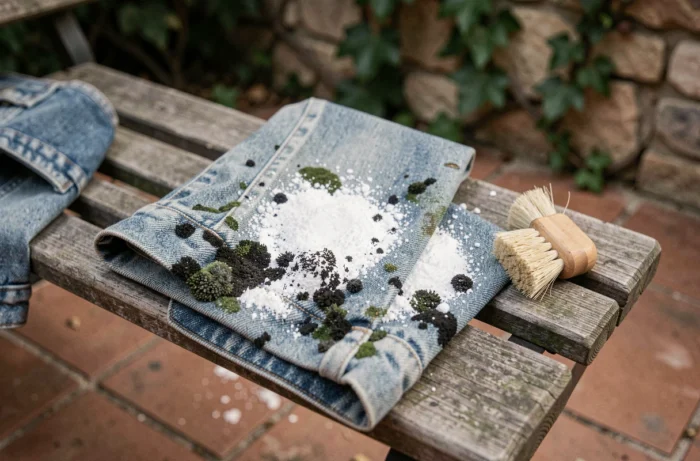
Baking soda (pH 8.3) primarily acts as a mild abrasive and deodorizer. When applied as a paste on a mold stain, it helps mechanically dislodge surface fungal residues. Its own antifungal power is limited.
Sodium percarbonate releases hydrogen peroxide when in contact with hot water. It is an oxidizing agent that destroys mold pigments and part of the hyphae. It is the most effective alternative to bleach on white or colorfast fabrics made of cotton, linen, or hemp.
Soaking Method with Percarbonate for Old Mold Stains
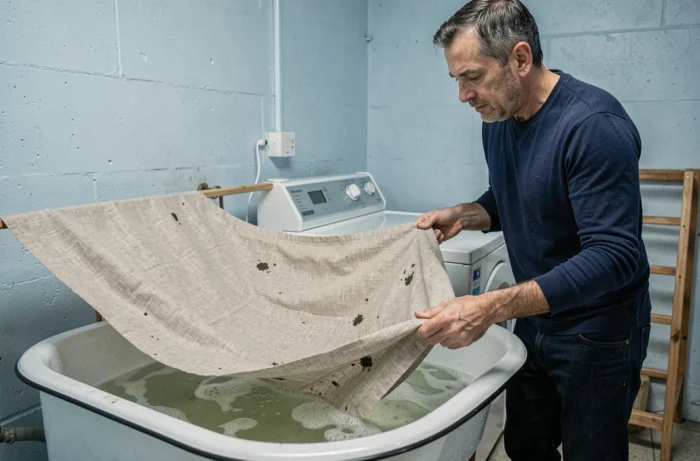
Dissolve one to two tablespoons of percarbonate in one liter of hot water (between 40 and 60 °C). Immerse the textile for two to four hours. Rinse thoroughly, then wash in the machine.
On colored fabrics, percarbonate may lighten the shades. Limit soaking to one hour and test on a hidden area remains the only reliable precaution. On silk and wool, percarbonate should be excluded: active oxygen degrades protein fibers.
After Stain Removal: Eliminate the Source of Moisture to Prevent Recurrence
Treating a mold stain without correcting the environment that produced it is like repainting a damp wall. A recurring mold indicates an unresolved moisture problem, not a poor choice of stain remover.
Mold spores are ubiquitous in indoor air. They only colonize a fabric if it remains damp long enough in a poorly ventilated space. Three parameters to check after any textile mold episode:
- The relative humidity of the storage room: above a certain threshold, condensation on folded or hung textiles becomes permanent, especially in closed closets without air circulation
- Complete drying before storage: a garment stored still slightly damp after washing creates an ideal breeding ground for mold
- Ventilation of storage spaces: slightly open wardrobe doors, space out hangers, use silica gel packets in airtight storage boxes
The discoloration left by old mold on white cotton, even after treatment with percarbonate, may be permanent. This residual mark is not a health risk if washing has eliminated living spores, but it indicates fiber degradation by fungal enzymes. A fabric whose weave is weakened by mold will not regain its original strength, regardless of the product used.