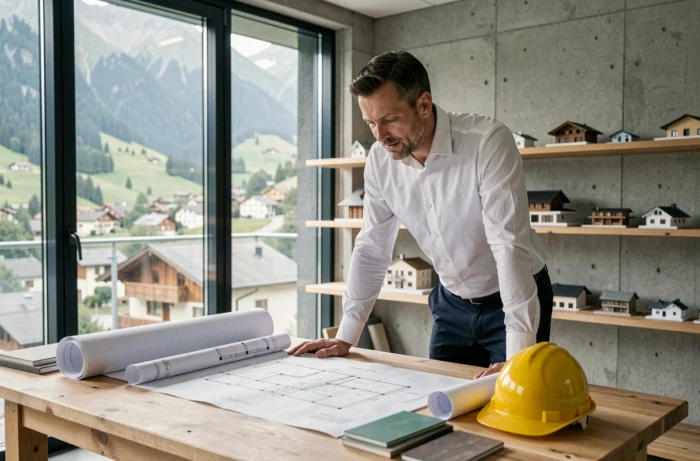
Building or renovating in Switzerland is not just about choosing an architect and signing a quote. The rules vary from one canton to another, energy requirements are tightening, and financial aid is changing rapidly. Laying the right foundations before the first shovel hit the ground avoids extra costs and administrative blockages that can delay a project by several months.
Cantonal regulations in Switzerland: the trap of local variations
Are you planning to renovate a façade in the canton of Vaud? The standards will not be the same as in Geneva or Valais. In Switzerland, each canton sets its own construction rules, aesthetic requirements, heritage restrictions, and energy thresholds. A municipality can even impose additional constraints beyond those of the canton.
In practical terms, this means that a building permit granted in one village may not necessarily have been approved in the neighboring municipality. Before drawing up plans, consult the municipal regulations on construction and the local development plan.
Buildings located in protected areas or classified as historical heritage are subject to even stricter restrictions. Modifying a roof, changing the color of a plaster, or installing solar panels may require specific authorization. Resources like bien-construire.ch help navigate the various construction sectors in Switzerland and identify professionals suited to your region.
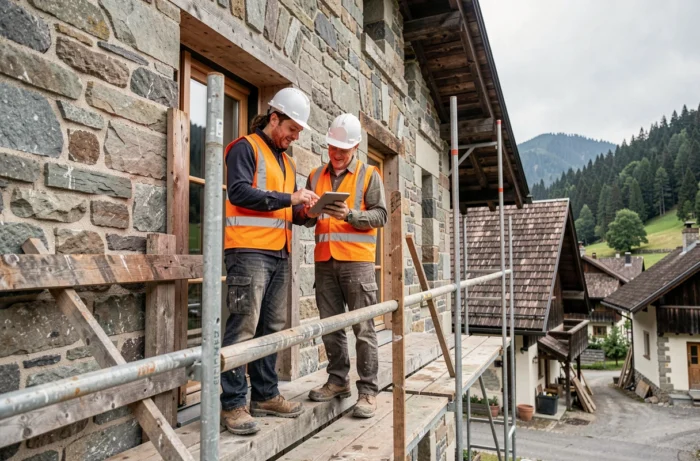
CECB and energy obligations: anticipating new requirements
The Cantonal Energy Certificate for Buildings (CECB) is currently optional in most cases. However, the Confederation is preparing for its generalization. The idea is to make an energy diagnosis mandatory for a large part of the old real estate stock.
Why this change? Switzerland aims for carbon neutrality, and buildings represent a significant share of CO₂ emissions. Homes classified E, F, or G will need to reach at least class D, with compliance deadlines ranging from ten to twenty years depending on the current class.
If your property is old, obtaining a CECB now gives you a concrete advantage. You identify priority areas (envelope insulation, heating replacement, windows) and plan the work in stages, taking advantage of available aids before they are refocused on the most urgent cases.
Energy renovation work: where to start
The order of interventions is as important as the choice of materials. Replacing an oil boiler with a heat pump without having insulated the walls is like heating a leaky building. The logic is as follows:
- Insulate the building envelope (roof, walls, slab) to reduce energy needs before sizing a new heating system
- Replace windows if their thermal coefficient exceeds cantonal thresholds, checking compatibility with any heritage constraints
- Install a heat production system suitable for the insulated building (heat pump, wood heating, solar thermal)
- Plan for controlled mechanical ventilation, often overlooked, but necessary in a well-sealed building to avoid humidity problems
Insulation before heating, always. This sequence reduces the oversizing of installations and optimizes the return on investment.
Subsidies and incentive programs: available aids in Switzerland
Financing a renovation in Switzerland does not rely solely on your own funds or a mortgage. Since 2025, the Federal Office of Energy has launched a new incentive program that complements the existing Building Program.

This program primarily targets the replacement of decentralized electric heating and large fossil fuel installations. A bonus is granted when the efficiency of the building envelope reaches a certain level. In 2025, over 636 million francs were committed to these programs, with projected CO₂ savings over the entire lifespan of the financed measures.
Each canton manages its own subsidies in addition to the federal program. The amounts and eligibility conditions vary. Check the cantonal aids before signing a contract with a contractor, as some subsidies must be requested before the work begins.
Tax deductions: an often underestimated lever
Maintenance and energy renovation costs are deductible from taxable income in most cantons. Spreading the work over two or three tax periods can sometimes increase the benefit, especially if the total amount far exceeds the annual income. A tax advisor familiar with Swiss real estate can accurately quantify the gain.
Quotes and choosing construction companies in Switzerland
Comparing quotes in Switzerland requires looking beyond the total price. A low quote that does not detail the services often hides optional items that will inflate the final bill.
You received three offers for the same renovation, but the amounts vary widely? This is common. The difference rarely lies in the company’s margin. It comes from the chosen materials, the planned insulation thickness, the type of finishes, and especially what is included or not in the price.
- Ensure that each quote mentions the same services: demolition, debris removal, surface preparation, supply and installation
- Ask for the energy class of the proposed materials, not just the brand
- Require a provisional schedule with start and end dates for each batch of work
A detailed quote item by item protects both parties in case of disputes. It also serves as a basis for tracking the progress of the project and validating payments in stages.
Prefer companies with verifiable references in your canton. A contractor who knows the practices of the local construction service will save time on administrative procedures and avoid back-and-forth with the authorities.
Swiss construction regulations are evolving rapidly, particularly regarding energy aspects. A well-prepared project integrates regulatory constraints, financial aids, and a realistic timeline from the outset. Waiting for renovation obligations to tighten means losing access to the most generous subsidies and exposing yourself to imposed rather than chosen deadlines.