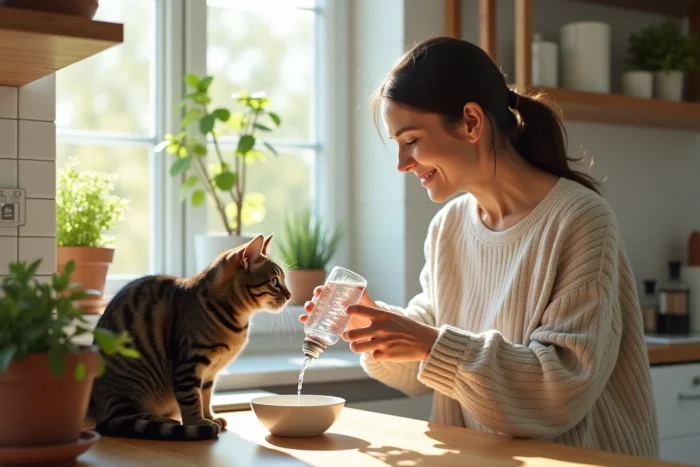
Can a cat really benefit from mineral water that is supposed to be purer than tap water? Some households replace tap water with Evian, convinced they are providing their pet with superior hydration. But the reality of feline needs does not always conform to human logic: the mineral composition of bottled water is not always suitable for their particular metabolism.
Veterinarians agree: the choice of water directly influences renal and urinary health, especially for cats that already have fragility or are aging. With varying profiles—young animals, seniors, those with health issues—recommendations change based on the local water quality, individual tolerance, and the general condition of the animal.
Why hydration is essential for the health of cats and dogs
For both cats and dogs, water balance is crucial for every organ. Water regulates temperature, transports nutrients, and promotes waste elimination through the kidneys. Felines, descendants of carnivores living in arid environments, naturally drink little. An adult cat primarily fed dry kibble, which dominates feline diets today, must therefore compensate with regular intakes of fresh water.
Several factors influence the amount to provide: age, type of food, activity level, and the animal’s health. Insufficient hydration exposes them to complications: urinary stones, kidney failure, or even digestive issues. Professionals emphasize that the quality of water for cats or dogs, its freshness, and the cleanliness of the bowl are far from secondary details.
It is in this context that the question of using Evian water for cats becomes significant. Some argue that low-mineral water, free from pollutants, might better suit the specific needs of our companions. But the reality is not just a simple label: pH, calcium content, magnesium—all of it matters. The impact on urinary health depends on each animal’s profile, and caution is advised, especially with the most vulnerable.
Tap water, bottled water, or distilled: what are the differences for our animals?
The debate over the quality of water provided to our cats and dogs deserves a dispassionate analysis. Tap water, bottled water, distilled water: each has its own characteristics that influence animal well-being. Tap water, easily accessible and economical, has a variable composition depending on the region: presence of limestone, chlorine residues, or other treatment traces. This cocktail is not neutral for all animals: some show a strong sensitivity to water that is too mineralized or too disinfected.
As for bottled waters, their stable composition and low levels of minerals, particularly calcium and magnesium, may be more suitable for cats prone to urinary issues. The absence of chlorine is often appreciated by the most discerning animals. On the other hand, distilled water, devoid of any minerals, should not become the norm: it does not meet daily physiological needs and can even be detrimental in the long term for dogs and cats.
Before making a decision, several criteria must be considered: source, composition, frequency of water renewal. Only a precise analysis of tap water quality can determine the necessity of resorting to bottled water. An excess of limestone can promote the appearance of urinary stones in predisposed animals, while low-mineral water limits this risk and is often more appealing. Each animal has its own tolerances, dictated by its age, diet, and experiences. It is up to each owner to observe, adjust, and sometimes consult.
My cat refuses tap water: practical tips to encourage good hydration
When a cat turns its nose up at tap water, the attentive owner wonders. Felines, very particular about the cleanliness and taste of water, sometimes show a clear preference for low-mineral or room temperature water. Some reject stagnant water or categorically refuse water marked by chlorine. This is not just a whim: hydration remains a major issue, especially for adult cats fed with kibble and thus at increased risk of urinary issues.
Some simple actions can facilitate better daily hydration:
- Change the water at least twice a day.
- Wash the bowl daily to prevent bacterial growth.
- Provide always clean and fresh water, accessible at all times.
- Place multiple water sources around the house to stimulate the cat’s curiosity and encourage more drinking.
Many cats enjoy fountains that keep the water moving and more oxygenated. This type of setup responds to an instinctive attraction to fresh and flowing water. The amount of water consumed varies with age, feeding mode, and activity level. A cat exclusively fed kibble must compensate for the lack of moisture in its diet by drinking enough. If your pet seems intolerant to tap water, opt for low-mineral water to avoid reluctance or associated health issues.
Stay alert to any changes in your pet’s drinking habits: sudden changes, increases or decreases in consumption, can signal an underlying health problem. Adjust your practices if necessary, and consult a veterinarian if in doubt. Daily vigilance regarding water, often underestimated, determines the vitality and lifespan of our companions—a detail that, in the long run, makes all the difference.